 Add to Chrome
 Add to Firefox
 Add to Edge
ARMOR: Agentic Reasoning for Methods Orchestration and Reparameterization for Robust Adversarial Attacks
Jan 26, 2026
Existing automated attack suites operate as static ensembles with fixed sequences, lacking strategic adaptation and semantic awareness. This paper introduces the Agentic Reasoning for Methods Orchestration and Reparameterization (ARMOR) framework to address these limitations. ARMOR orchestrates three canonical adversarial primitives, Carlini-Wagner (CW), Jacobian-based Saliency Map Attack (JSMA), and Spatially Transformed Attacks (STA) via Vision Language Models (VLM)-guided agents that collaboratively generate and synthesize perturbations through a shared ``Mixing Desk". Large Language Models (LLMs) adaptively tune and reparameterize parallel attack agents in a real-time, closed-loop system that exploits image-specific semantic vulnerabilities. On standard benchmarks, ARMOR achieves improved cross-architecture transfer and reliably fools both settings, delivering a blended output for blind targets and selecting the best attack or blended attacks for white-box targets using a confidence-and-SSIM score.

Difficulty-guided Sampling: Bridging the Target Gap between Dataset Distillation and Downstream Tasks
Jan 15, 2026In this paper, we propose difficulty-guided sampling (DGS) to bridge the target gap between the distillation objective and the downstream task, therefore improving the performance of dataset distillation. Deep neural networks achieve remarkable performance but have time and storage-consuming training processes. Dataset distillation is proposed to generate compact, high-quality distilled datasets, enabling effective model training while maintaining downstream performance. Existing approaches typically focus on features extracted from the original dataset, overlooking task-specific information, which leads to a target gap between the distillation objective and the downstream task. We propose leveraging characteristics that benefit the downstream training into data distillation to bridge this gap. Focusing on the downstream task of image classification, we introduce the concept of difficulty and propose DGS as a plug-in post-stage sampling module. Following the specific target difficulty distribution, the final distilled dataset is sampled from image pools generated by existing methods. We also propose difficulty-aware guidance (DAG) to explore the effect of difficulty in the generation process. Extensive experiments across multiple settings demonstrate the effectiveness of the proposed methods. It also highlights the broader potential of difficulty for diverse downstream tasks.
Yes FLoReNce, I Will Do Better Next Time! Agentic Feedback Reasoning for Humorous Meme Detection
Jan 12, 2026Humorous memes blend visual and textual cues to convey irony, satire, or social commentary, posing unique challenges for AI systems that must interpret intent rather than surface correlations. Existing multimodal or prompting-based models generate explanations for humor but operate in an open loop,lacking the ability to critique or refine their reasoning once a prediction is made. We propose FLoReNce, an agentic feedback reasoning framework that treats meme understanding as a closed-loop process during learning and an open-loop process during inference. In the closed loop, a reasoning agent is critiqued by a judge; the error and semantic feedback are converted into control signals and stored in a feedback-informed, non-parametric knowledge base. At inference, the model retrieves similar judged experiences from this KB and uses them to modulate its prompt, enabling better, self-aligned reasoning without finetuning. On the PrideMM dataset, FLoReNce improves both predictive performance and explanation quality over static multimodal baselines, showing that feedback-regulated prompting is a viable path to adaptive meme humor understanding.
Normalized Conditional Mutual Information Surrogate Loss for Deep Neural Classifiers
Jan 05, 2026In this paper, we propose a novel information theoretic surrogate loss; normalized conditional mutual information (NCMI); as a drop in alternative to the de facto cross-entropy (CE) for training deep neural network (DNN) based classifiers. We first observe that the model's NCMI is inversely proportional to its accuracy. Building on this insight, we introduce an alternating algorithm to efficiently minimize the NCMI. Across image recognition and whole-slide imaging (WSI) subtyping benchmarks, NCMI-trained models surpass state of the art losses by substantial margins at a computational cost comparable to that of CE. Notably, on ImageNet, NCMI yields a 2.77% top-1 accuracy improvement with ResNet-50 comparing to the CE; on CAMELYON-17, replacing CE with NCMI improves the macro-F1 by 8.6% over the strongest baseline. Gains are consistent across various architectures and batch sizes, suggesting that NCMI is a practical and competitive alternative to CE.
StereoWorld: Geometry-Aware Monocular-to-Stereo Video Generation
Dec 11, 2025The growing adoption of XR devices has fueled strong demand for high-quality stereo video, yet its production remains costly and artifact-prone. To address this challenge, we present StereoWorld, an end-to-end framework that repurposes a pretrained video generator for high-fidelity monocular-to-stereo video generation. Our framework jointly conditions the model on the monocular video input while explicitly supervising the generation with a geometry-aware regularization to ensure 3D structural fidelity. A spatio-temporal tiling scheme is further integrated to enable efficient, high-resolution synthesis. To enable large-scale training and evaluation, we curate a high-definition stereo video dataset containing over 11M frames aligned to natural human interpupillary distance (IPD). Extensive experiments demonstrate that StereoWorld substantially outperforms prior methods, generating stereo videos with superior visual fidelity and geometric consistency. The project webpage is available at https://ke-xing.github.io/StereoWorld/.
TiP4GEN: Text to Immersive Panorama 4D Scene Generation
Aug 17, 2025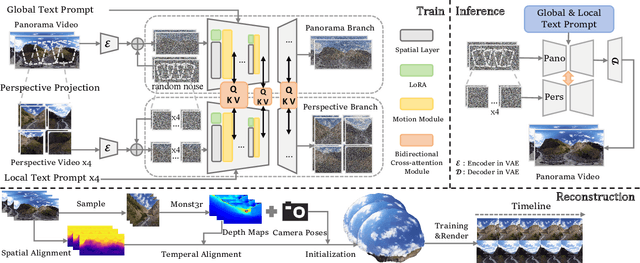
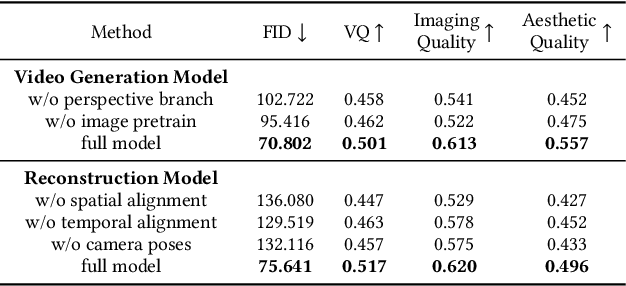
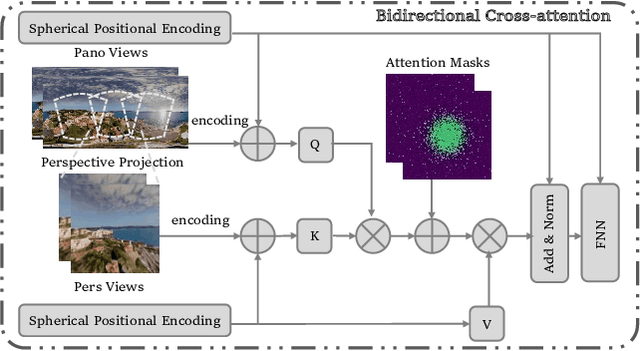
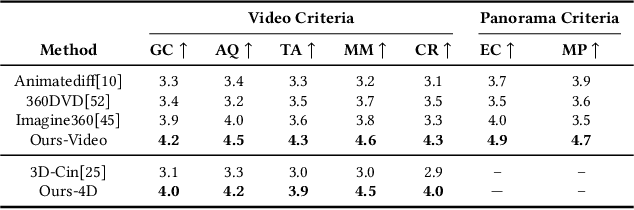
With the rapid advancement and widespread adoption of VR/AR technologies, there is a growing demand for the creation of high-quality, immersive dynamic scenes. However, existing generation works predominantly concentrate on the creation of static scenes or narrow perspective-view dynamic scenes, falling short of delivering a truly 360-degree immersive experience from any viewpoint. In this paper, we introduce \textbf{TiP4GEN}, an advanced text-to-dynamic panorama scene generation framework that enables fine-grained content control and synthesizes motion-rich, geometry-consistent panoramic 4D scenes. TiP4GEN integrates panorama video generation and dynamic scene reconstruction to create 360-degree immersive virtual environments. For video generation, we introduce a \textbf{Dual-branch Generation Model} consisting of a panorama branch and a perspective branch, responsible for global and local view generation, respectively. A bidirectional cross-attention mechanism facilitates comprehensive information exchange between the branches. For scene reconstruction, we propose a \textbf{Geometry-aligned Reconstruction Model} based on 3D Gaussian Splatting. By aligning spatial-temporal point clouds using metric depth maps and initializing scene cameras with estimated poses, our method ensures geometric consistency and temporal coherence for the reconstructed scenes. Extensive experiments demonstrate the effectiveness of our proposed designs and the superiority of TiP4GEN in generating visually compelling and motion-coherent dynamic panoramic scenes. Our project page is at https://ke-xing.github.io/TiP4GEN/.
The Missing Point in Vision Transformers for Universal Image Segmentation
May 26, 2025Image segmentation remains a challenging task in computer vision, demanding robust mask generation and precise classification. Recent mask-based approaches yield high-quality masks by capturing global context. However, accurately classifying these masks, especially in the presence of ambiguous boundaries and imbalanced class distributions, remains an open challenge. In this work, we introduce ViT-P, a novel two-stage segmentation framework that decouples mask generation from classification. The first stage employs a proposal generator to produce class-agnostic mask proposals, while the second stage utilizes a point-based classification model built on the Vision Transformer (ViT) to refine predictions by focusing on mask central points. ViT-P serves as a pre-training-free adapter, allowing the integration of various pre-trained vision transformers without modifying their architecture, ensuring adaptability to dense prediction tasks. Furthermore, we demonstrate that coarse and bounding box annotations can effectively enhance classification without requiring additional training on fine annotation datasets, reducing annotation costs while maintaining strong performance. Extensive experiments across COCO, ADE20K, and Cityscapes datasets validate the effectiveness of ViT-P, achieving state-of-the-art results with 54.0 PQ on ADE20K panoptic segmentation, 87.4 mIoU on Cityscapes semantic segmentation, and 63.6 mIoU on ADE20K semantic segmentation. The code and pretrained models are available at: https://github.com/sajjad-sh33/ViT-P}{https://github.com/sajjad-sh33/ViT-P.
Advancements in Medical Image Classification through Fine-Tuning Natural Domain Foundation Models
May 26, 2025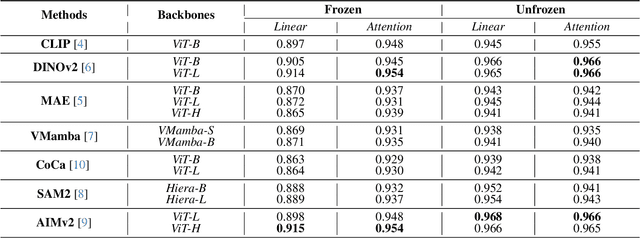
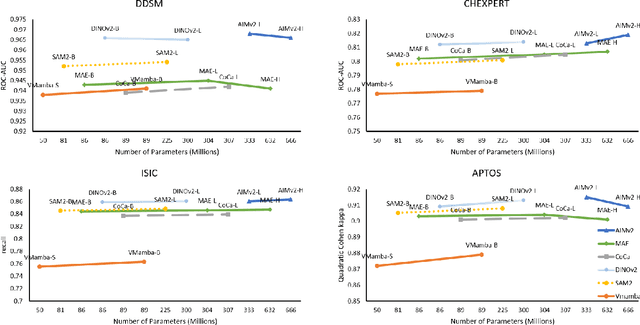
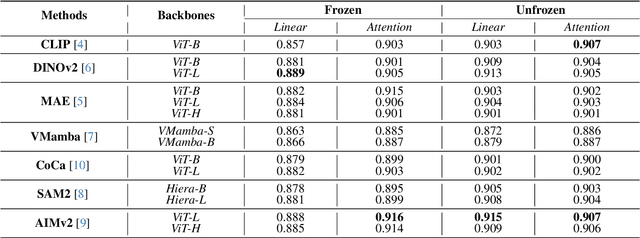
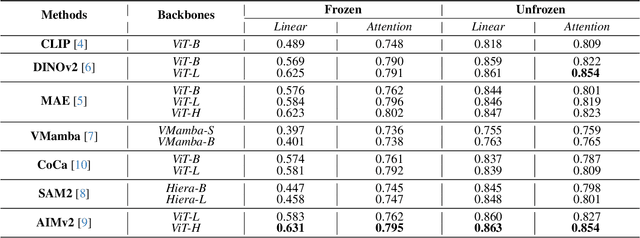
Using massive datasets, foundation models are large-scale, pre-trained models that perform a wide range of tasks. These models have shown consistently improved results with the introduction of new methods. It is crucial to analyze how these trends impact the medical field and determine whether these advancements can drive meaningful change. This study investigates the application of recent state-of-the-art foundation models, DINOv2, MAE, VMamba, CoCa, SAM2, and AIMv2, for medical image classification. We explore their effectiveness on datasets including CBIS-DDSM for mammography, ISIC2019 for skin lesions, APTOS2019 for diabetic retinopathy, and CHEXPERT for chest radiographs. By fine-tuning these models and evaluating their configurations, we aim to understand the potential of these advancements in medical image classification. The results indicate that these advanced models significantly enhance classification outcomes, demonstrating robust performance despite limited labeled data. Based on our results, AIMv2, DINOv2, and SAM2 models outperformed others, demonstrating that progress in natural domain training has positively impacted the medical domain and improved classification outcomes. Our code is publicly available at: https://github.com/sajjad-sh33/Medical-Transfer-Learning.
DD-Ranking: Rethinking the Evaluation of Dataset Distillation
May 19, 2025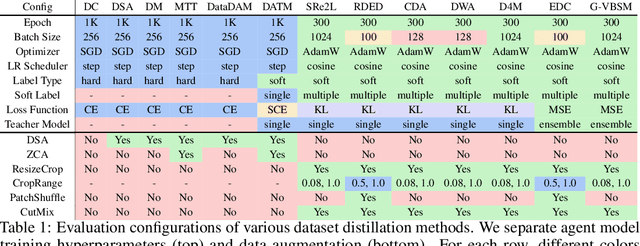
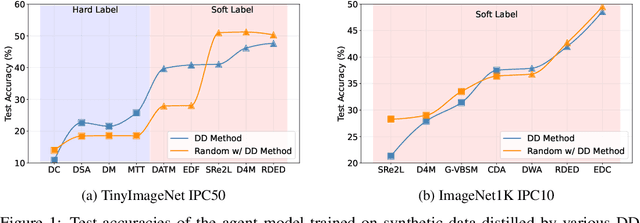
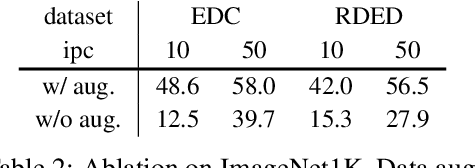
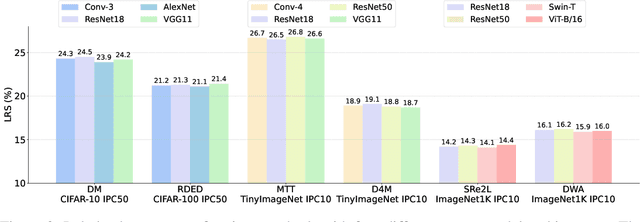
In recent years, dataset distillation has provided a reliable solution for data compression, where models trained on the resulting smaller synthetic datasets achieve performance comparable to those trained on the original datasets. To further improve the performance of synthetic datasets, various training pipelines and optimization objectives have been proposed, greatly advancing the field of dataset distillation. Recent decoupled dataset distillation methods introduce soft labels and stronger data augmentation during the post-evaluation phase and scale dataset distillation up to larger datasets (e.g., ImageNet-1K). However, this raises a question: Is accuracy still a reliable metric to fairly evaluate dataset distillation methods? Our empirical findings suggest that the performance improvements of these methods often stem from additional techniques rather than the inherent quality of the images themselves, with even randomly sampled images achieving superior results. Such misaligned evaluation settings severely hinder the development of DD. Therefore, we propose DD-Ranking, a unified evaluation framework, along with new general evaluation metrics to uncover the true performance improvements achieved by different methods. By refocusing on the actual information enhancement of distilled datasets, DD-Ranking provides a more comprehensive and fair evaluation standard for future research advancements.
Dynamic Vision Mamba
Apr 07, 2025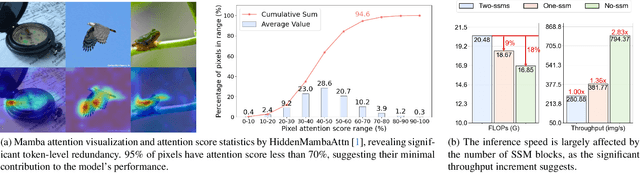
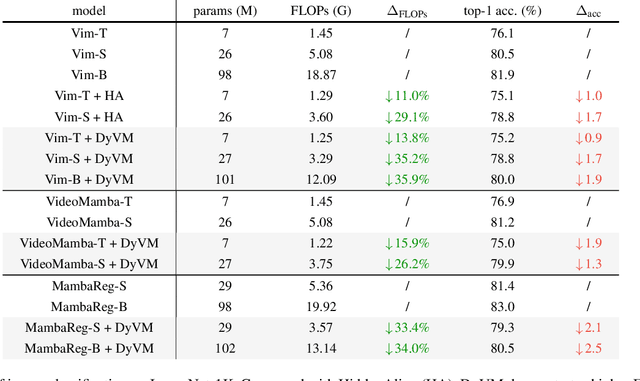
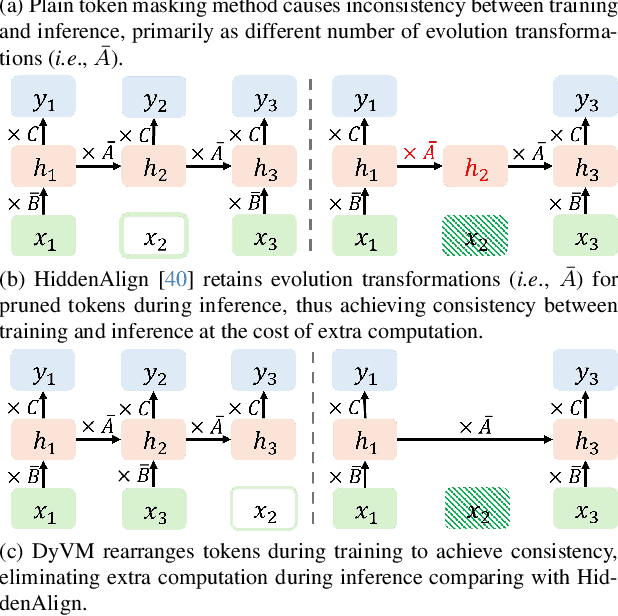
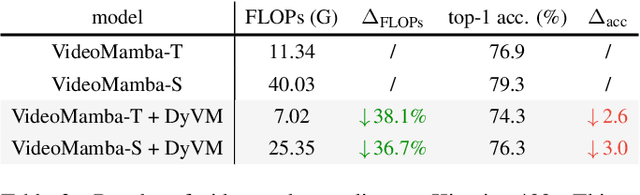
Mamba-based vision models have gained extensive attention as a result of being computationally more efficient than attention-based models. However, spatial redundancy still exists in these models, represented by token and block redundancy. For token redundancy, we analytically find that early token pruning methods will result in inconsistency between training and inference or introduce extra computation for inference. Therefore, we customize token pruning to fit the Mamba structure by rearranging the pruned sequence before feeding it into the next Mamba block. For block redundancy, we allow each image to select SSM blocks dynamically based on an empirical observation that the inference speed of Mamba-based vision models is largely affected by the number of SSM blocks. Our proposed method, Dynamic Vision Mamba (DyVM), effectively reduces FLOPs with minor performance drops. We achieve a reduction of 35.2\% FLOPs with only a loss of accuracy of 1.7\% on Vim-S. It also generalizes well across different Mamba vision model architectures and different vision tasks. Our code will be made public.